Common Defects We Diagnose
If something's wrong in a Sydney home, it's usually one of these.
Every Sydney property type, Federation terrace, mid-century brick, 70s walk-up, contemporary build, has its own predictable failure modes. Here are the defects we trace and fix most often.
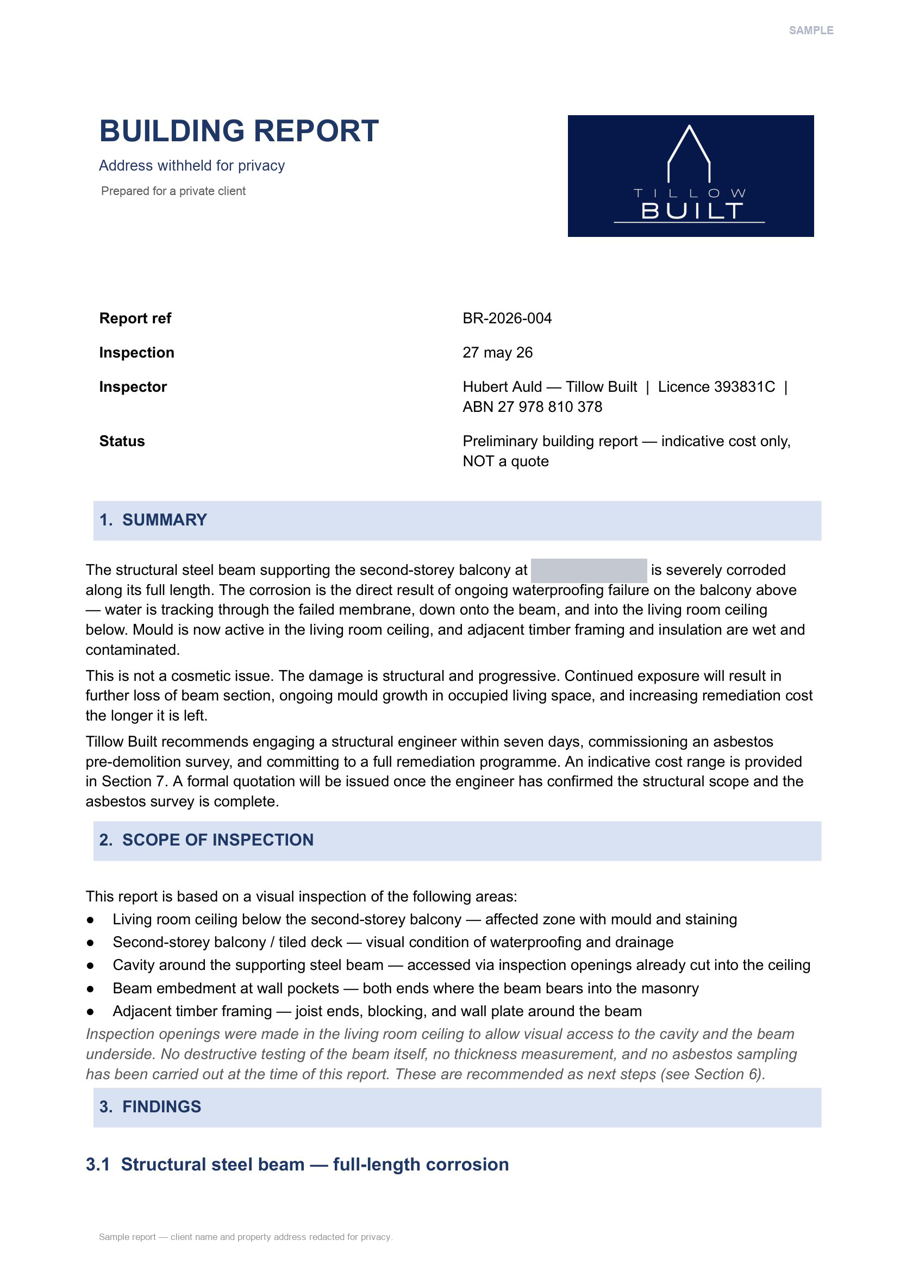
Damp spots on the ceiling under a balcony
What you see: Wet patches, brown staining or bubbling paint on a ceiling directly below an upstairs balcony, deck or wet area. Often misdiagnosed as a roof leak.
What it usually is: A compromised waterproof membrane in the balcony above. The membrane, a flexible sheet or liquid-applied coating beneath the tiles, has cracked, debonded at the perimeter, or failed at a drainage outlet. Water gets between the tiles, tracks along the slab, and surfaces on the ceiling below. Sydney's freeze-free but UV-heavy, salt-laden climate ages exposed membranes faster than most homeowners expect (10-15 years on a tiled balcony, sooner on a south or west-facing aspect).
What the fix actually looks like: The only durable repair is to lift the balcony tiles, remove the failed membrane, address any rot in the underlying screed or substrate, install a fresh two-coat liquid membrane to AS 4654.2, and re-tile. Patching from below, stains, ceiling cuts, "miracle" sealants on top of the existing tiles, buys you twelve months at best. We document the failure in the report with drone roof-level imagery, the exact run of the leak, and a scope-of-works the waterproofer and tiler can quote from.
Subfloor moisture, salt damp and sandstone footing erosion
What you see: Musty smell, salt efflorescence on internal lower walls, paint blistering at skirtings, cracking mortar above sandstone footings, springy floors.
What it usually is: Failed sub-floor ventilation combined with a slow-leaking waste line, a buried downpipe, or rising damp through old sandstone footings, common in pre-1940 Eastern Suburbs and Inner West properties. Eroded sandstone is structural; ignore it long enough and the masonry above starts to crack.
What the fix actually looks like: Locate and isolate the water source (often a buried plumbing leak, we drone the roofline and check downpipe paths first). Re-establish sub-floor ventilation per the NCC. Where sandstone is eroded, an engineer specifies consolidation, repointing or grouting. Internal damp courses and rendered finishes follow.
Eaves cladding rot and gutter rust-through
What you see: Soft, sagging or stained eaves boards. Peeling paint at the soffit. Rust streaks down the wall from the gutter. Sometimes visible from the street long before the owner notices internally.
What it usually is: Blocked gutters that have been overflowing back into the eaves for years. The gutter rusts through from the inside, the back batten rots, and the eaves cladding behind follows. We see this on every second roof we inspect, it's the most catastrophic-cheap-to-fix defect category in Sydney.
What the fix actually looks like: Drone roof inspection to map the gutter run, then ladder access to confirm. Replace failed sections of gutter, fascia and eaves cladding, prime all six faces before refit, full exterior repaint of the affected run. Often paired with a downpipe redirect.
Lath-and-plaster ceiling sag or partial collapse
What you see: A section of ceiling bulging visibly downward, especially in pre-1950 properties. Hairline cracks radiating from one point. Sometimes a small hole where a fixing has pulled through.
What it usually is: Original lath-and-plaster ceiling with corroded or aged keys, the small bumps of plaster that lock the ceiling to the timber lath above. Over 80-100 years they fatigue and let go. Almost always a P1 (immediate) finding in our reports because partial collapse is a falling-debris hazard.
What the fix actually looks like: Prop and isolate the room. Remove the failed lath-and-plaster section. Inspect the void above for any contributing leak before close-up. Install plasterboard, set, paint. Cornices preserved where possible; replaced where the original is too damaged.
Possum or rodent damage in the roof cavity
What you see: Night noise overhead. Droppings. Discoloured ceiling patches. Unexplained electrical faults. Sometimes hot-water taps that won't fully shut off.
What it usually is: Wildlife in the cavity, usually possums in older homes, chewing cable insulation and displacing plumbing. They enter through an eave gap or a missing tile flashing. The plumbing and electrical faults are usually consequences, not coincidences.
What the fix actually looks like: Wildlife handler installs a one-way exit and possum box, seals entry points after exclusion. Once they're out, we inspect the cavity for chewed cables, lifted pipework and damaged insulation, and scope the remediation. Order matters, fix the cables before the possum is gone and you'll be doing it again.
Timber rot at posts, handrails and exterior joinery
What you see: Soft or spongy timber at the base of verandah posts, handrails that move when you lean on them, sash windows that won't open, doors swelling.
What it usually is: Failed paint film leading to long-term moisture exposure. The post-to-slab junction (where water sits) is the most common entry point. Sydney's wet-summer / dry-winter cycle compounds it.
What the fix actually looks like: Inspect each element for retained sound section. Where enough remains: epoxy consolidation, splicing in new timber, full prime and paint. Where it doesn't: full replacement with mechanically anchored fixings, flashing at the junction, and a maintenance paint cycle locked in.